Book Publishing Secrets with Theresa Cheung #books #bookpublishing


Theresa Cheung is an internationally bestselling author and public speaker. She has been writing about spirituality, dreams and the paranormal for the past 25 years, and was listed by Watkins Mind Body and Spirit magazine as one of the 100 most spiritually influential living people in 2023. She has a degree in Theology and English from Kings College, Cambridge University, frequently collaborating with leading scientists and neuroscientists researching consciousness.

Theresa is regularly featured in national newspapers and magazines, and she is a frequent radio, podcast and television guest and ITV: This Morning’s regular dream decoding expert. She hosts her own popular spiritual podcast called White Shores and weekly live UK Health Radio Show: The Healing Power of Your Dreams.

Her latest book is the paranormal thriller, NightBorn, available at Amazon US and Amazon UK.

You can visit her website at www.theresacheung.com or connect with her on X, Facebook, Instagram or Goodreads.

📙Thank you for your time in answering our questions about getting published.  Let’s begin by having you explain to us why you decided to become an author and pen this book?

I’ve spent most of my life immersed in dreams, psychology, and the unseen dimensions of human experience. Writing NightBorn felt like the natural next step and a way to bring everything I’ve studied into a story younger and fiction-loving readers would connect with. I wanted to smuggle decades of dream


research into a gripping narrative they couldn’t put down. 

📙Is this your first book?

It’s my first novel, yes. However, I’ve written many nonfiction bestsellers on dreams, spirituality, and the afterlife but NightBorn is my debut in fiction, and it’s the book that pushed me furthest outside my comfort zone.

📙With this particular book, how did you publish – traditional, small press, Indie, etc. – and why did you choose this method?

I chose to publish with a small independent press. My longstanding traditional publishers weren’t ready to support me outside my nonfiction niche, so I followed my instincts and went indie to give NightBorn the freedom it needed.

📙Can you tell us a little about your publishing journey?  The pros and cons?

Pros: complete creative control, a deeply personal process, and the ability to shape the book exactly as I envisioned it.
Cons: fewer resources, no advance, and the responsibility for pushing the book into the world largely falling on my shoulders. It is challenging but also incredibly liberating.

📙What lessons do you feel you learned about your particular publishing journey and about the publishing industry as a whole?

I learned that publishers often prefer to keep writers in their established lanes, even when passion pulls them elsewhere. I also learned that sometimes you have to champion your own work long before anyone else does. Ultimately, my belief in the book mattered more than the route it took.

📙Would you recommend this method of publishing to other authors?

Yes but with a caveat. Indie publishing can be empowering, but it requires resilience, self-motivation, and a willingness to manage much of the process yourself. If you believe in your project wholeheartedly and are prepared to work hard, it’s a rewarding path.

📙What’s the best advice you can give to aspiring authors? 

Write the story only you can tell. Trust your instincts, even when others can’t yet see your vision. Write for the love of it and not to impress others. And above all keep going. Perseverance is the quiet superpower behind every book that finally makes its way into the world.

NightBorn is available at Amazon. 

Book Publishing Secrets with Mary Lawlor #books #bookpublishing


Mary Lawlor is author of Fighter Pilot’s Daughter (Rowman & Littlefield 2013, paper 2015), Public Native America (Rutgers Univ. Press 2006), and Recalling the Wild (Rutgers Univ. Press, 2000). Her short stories and essays have appeared in Big Bridge and Politics/Letters. She studied the American University in Paris and earned a Ph.D. from New York University. She divides her time between an old farmhouse in Easton, Pennsylvania, and a cabin in the mountains of southern Spain.

You can visit her website at https://www.marylawlor.net/ or connect with her on Twitter or Facebook.

📙Thank you for your time in answering our questions about getting published.  Let’s begin by having you explain to us why you decided to become an author and pen this book?

I grew up in a military family. My father was a pilot, first in the Marine Corps and later in the Army. He tested new planes, taught others how to fly them, as was himself a fighter pilot. We moved every two years, according to the Defense Department’s demands. Fighter Pilot’s Daughter tracks this complicated experience during the middle years of the Cold War. 


In those days, the dangers of nuclear war were on most Americans’ minds. That and the “domino theory”—the idea that if one country went communist, others nearby would do the same—kept fear alive in us. The theory suggested that one country’s succumbing to communisim meant the whole world would soon be controlled by the Soviet Union. Those fears thrived in our household, just as it they did everywhere in American life.

The high anxiety of the Cold War meant my father was often away from home. Waiting on a ship off the coast of Guatemala for the start of an invasion, investigating a fly-over of the Soviet border in northern Turkey, keeping tuned to news from the Fulda Gap on the border of West and East Germany—in these and other situations too frightening for my sisters and I to know about, my father kept us in suspense from far away. We were happy when he came home, but without meaning to, he frightened us. He’d walk through the door, his head nearly touching the ceiling, his blue eyes lit with a long-distance gaze. He didn’t seem to have landed. He had gifts. He told stories. But he wasn’t really home yet, and we weren’t sure who he was. 

When my mother and sisters and I went with my Dad to new postings, we’d be excited by the prospect of seeing the new place but distraught at leaving friends behind. Tension grew between my parents. My mother was proud of my father’s accomplishments and at the same time angry with him for making her leave one home after another, never settling down. The strife between them was also fed by the dangers inherent in Dad’s work and by the steady nervousness in the air that World War III was just around the corner. They drank cocktails to ease the strain. They fought, their voices taut with anger and fear. They weren’t happy. Nobody was.

By the time I was ready for college, I’d been to 14 schools—a bewildering way to grow up. As I got older, my childhood faith in Dad grew cloudy. In the news and in the streets, I heard arguments against what he was doing—fighting the war in Vietnam, flying for a government that was killing civilians. I took a political stance against him, and our own Cold War developed. For years we didn’t speak. Finally, when he was retired and I had settled down into marriage and teaching, we found our way back to each other, happily and gratefully reconciled. 

Not long after, I started thinking about a book what would sort out what it had all meant. I made lists of all the schools and the places we called “home”; and of the government’s moves that drove ours. At a certain point, I put it all together in a first draft. Writing helped me make sense of not just how my sisters and I came through these chaotic times. It helped me see what our parents endured. After several more drafts, I had a 320 page story of our time I titled Fighter Pilot’s Daughter

📙Is this your first book?

No. I’ve written two books of cultural analysis—Recalling the Wild (about the closing of the American West) and Public Native America (about tribal casinos, museums and powwows), both published by Rutgers University Press. And I’ve just completed a novel, The Translators, about a pair of itinerant foreigners in medieval Spain.

📙With this particular book, how did you publish – traditional, small press, Indie, etc. – and why did you choose this method?

My agent found a receptive ear with Rowman and Littlefield. The editors there were interested in Fighter Pilot’s Daughter as it was, without asking for lots of changes. So we both decided to go with them. They’ve since been taken over by Bloomsbury, but traditionally, they’ve done a lot of books about military experience, so it seemed like a good fit for this story of a military family. They have good distribution, and the paperback edition came out a couple of years later.

📙Can you tell us a little about your publishing journey?  The pros and cons?

First I found an agent, Neil Salkind who was interested in the memoir genre. He was wonderful and placed the book quickly.  These days it’s difficult to find a publisher who’ll look at your manuscript if it doesn’t come through an agent, so I was very happy Neil took me on. I think there are a few publishing houses that accept manuscripts directly from authors, but it’s really important to find an agent. They know what to trust and what not to, what to look for in a contract and what to expect from a publisher. And the publishers trust them to have vetted people who approach them, so the publisher can count on the agent’s authors being reliably strong writers. It’s difficult to go about the process on your own, so I’d advise everyone to try to find an agent first. 

📙What lessons do you feel you learned about your particular publishing journey and about the publishing industry as a whole?

I’ve learned to be patient! Sometimes it seems as if agents and publishers move at glacial speed, but that’s only because they’re so incredibly busy. It takes them a long time to get to your manuscript when they have so many other already waiting for attention. You really have to learn to wait. And I learned to accept rejection without being stopped in my tracks by it. Publishers and agents are always reminding you that their responses are subjective, and it’s true: one editor’s or agent’s view will be entirely different from another’s. So I learned not to get too down when I’m rejected and to keep sending the book back out there! 

📙Would you recommend this method of publishing to other authors?

As I mentioned above, Rowman & Littlefield has been taken over by Bloomsbury. I haven’t had any dealings with the new group yet, so I can’t say anything about how it is to work with them, but generally speaking I can say that Bloomsbury has a very fine, even venerable reputation. 

📙What’s the best advice you can give to aspiring authors? 

Keep at it, every day. Listen to the words that sail through your mind, however briefly or dimly. They’re worth listening to and using. Remember doubt is part of the process: don’t let it stop you or get you down.

Fighter Pilot's Daughter is available at Amazon. 


Book Publishing Secrets with Kate Damon #books #bookpublishing


When Kate Damon is not writing, she and her husband enjoy RVing, spending time with family and friends, raising Monarch butterflies, and playing a wicked game of bridge.

Writing as Margaret Brownley, she has published more than 40 novels and is a New York Times bestselling author. Known for her memorable characters and humor, she is a two-time Romance Writers of America Rita finalist.

Not counting the book she wrote in sixth grade, and the puzzle of the missing socks, this is her first mystery.

Website http://margaret-brownley.com/

Twitter https://www.x.com/katejuryduty

Facebook https://www.facebook.com/MargaretBrownleyAuthor/ and https://www.facebook.com/p/Kate-Damon-61565155275435/

Instagram https://www.instagram.com/katedamonbooks

BookBubhttps://www.bookbub.com/authors/kate-damon

Goodreads https://www.goodreads.com/author/show/4072660.Kate_Damon and https://www.goodreads.com/author/show/163681.Margaret_Brownley

📙Thank you for your time in answering our questions about getting published.  Let’s begin by having you explain to us why you decided to become an author and pen this book? 

First of all, thank you for having me and letting me share my story. I can hardly remember a time when I didn’t want to be a writer.  So it really wasn’t a deliberate decision on my part, but rather a natural


progression.

As for why I decided to write this book, all my stories start with a question. The question for Jury Duty is Murder concerned the psychological and emotional impact on jurors who are sequestered for extended periods, specifically for months.  I had no idea I was writing a mystery until bodies started turning up on my computer screen.

📙Is this your first book?

No, this is not my first book, but since I’m using a pen name, it feels like it.  Writing under Margaret Brownley, I’ve published more than forty-six historical romance novels and am a New York, Times bestselling author.  This is my first mystery, which is why I’m writing it under a pen name. 

📙With this particular book, how did you publish – traditional, small press, Indie, etc. – and why did you choose this method?

When I first conceived of the idea for the book, I queried my regular publishers.  But since it was so different than anything I’d previously written, no one was interested. So I put the book aside.  However, the characters kept nagging at me and, finally, I continued to work on the book alongside my other projects.  I queried a small press, and the editor was kind enough to suggest I send the book to the Wild Rose Press.  That’s what I did, and here we are.


📙Can you tell us a little about your publishing journey? The pros and cons?

Having published numerous books, my journey has been a long one. I actually penned my first "book" in sixth grade, which ignited my lifelong dream of becoming a writer. However, my early aspirations faced significant challenges. In school, I struggled with English and even flunked the subject because I could not grasp the concept of diagramming sentences (still can’t). This setback was compounded by a discouraging remark from my teacher, who advised me to abandon any thoughts of pursuing writing.

Life took its course through various responsibilities such as jobs, marriage, and motherhood. Despite these commitments, the desire to write remained a constant presence in my life.  I wrote for the church newsletter, and after making the church picnic sound like a Grisham novel, my pastor took me aside and suggested that God probably meant for me to write fiction.

Since I wasn’t about to argue with God, I told my family that I intended to start taking my writing seriously and work on a book. To my surprise, my three children reacted with relief; it turned out that my penchant for crafting lengthy and what I believed were clever excuse notes had become a source of embarrassment for them.

The next four years were challenging as I faced an overwhelming number of rejections—enough to cover the walls of my home. It was during this period that I decided to join a writers' group, which proved to be a pivotal moment in my writing journey. The support and feedback from fellow writers helped me refine my craft and regain confidence in my abilities.

📙What lessons do you feel you learned about your particular publishing journey and about the publishing industry as a whole?

I was pretty ignorant about the whole publishing business.  My writing group taught me how to write a proposal and how to slant it for specific publishers and editors.  Back in those days, we didn’t have the Internet, and I spent a lot of time and money sending my books to the wrong people.  Now, you can look up publishers and editors online and find out what kind of books they are interested in.  

You can also join online writer groups, which provide invaluable information.  My writing group also held yearly conferences.  This enabled me to meet editors and pitch my stories face-to-face.  I also met my agent at one.  They say writing is a solitary profession, but I found the opposite to be true.  The amount of support and help for writers is amazing.  All you have to do is reach out.   

📙Would you recommend this method of publishing to other authors?

Absolutely.  It’s a tough business and the more you know, the better your chances of getting published.

📙What’s the best advice you can give to aspiring authors?

First, write the book.  Then be sure to stay in touch with your characters every day, even if it means rereading your last chapter.  That keeps the subconscious working.  Finally, join a writer’s group, preferably in your own genre.

Jury Duty is Murder is available at Amazon. 

Book Publishing Secrets with Christopher Kaufman #books #bookpublishing


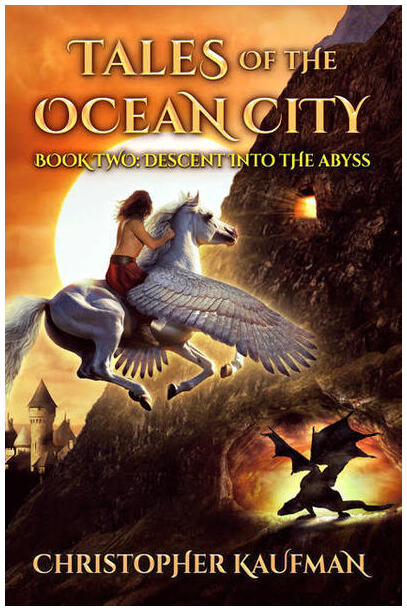
Christopher Kaufman is an author, composer, presenter, illustrative artist and performer. He started imaginative fantasy books with illustrative art at the age of nine. During high school years he found music and attended The New Orleans Center for The Creative Arts and went on to major in music composition in college. He finished his schooling – earning his DMA in music composition at Cornell University where he studied with Pulitzer Prize Winning composers who prize his abilities as a composer.

Christopher is the type of person who needs imaginative fantasy scenarios to get to sleep. Therefore, he emerged from Cornell, not only with his degrees in music, but with the full event structure for his classic epic fantasy series Tales Of The Ocean City in his mind.

He began writing the story down in the early 2000’s, but it did not really come to life until he developed his home music ‘laboratory’ and started creating the music and text at the same time. Thus books one and two of TOC came about simultaneously as both graphically illustrated pages and effulgent audio albums filled with cinematic epic symphonic music.

They exist now as physical books and audio albums (that go together) and the new Video Book version.  He performs live tours with the music pouring through speakers, live narration and the colorful pages streaming on screen – a true immersive multi-media experience.

He also maintains his career as a composer for the concert stage with a full body of work, from solo works thru orchestral. He specializes as well in ‘environmental works’ which feature soundscapes crafted from hundreds of natural sounds, live musicians (from soloists, chamber groups and to full orchestra), videos filled with both natural and artistic images and readings from the works of John Muir and others.

Kaufman’s books feature full-page graphic illustration and go-with audio albums filled with epic cinematic music, narration and sound design.  All available, with generous discount packages, at kaufmantales.com (epubs and the new Video  Book version available there!).

His author page is talesoftheoceancity.com.

His you-tube channel is SOUNDARTUS.

Visit him at Facebook at https://www.facebook.com/talesoftheoceancity.

📙Is this your first book?

The first book of this five-book series was indeed my first book ever. Many since! It has been in my mind for many years.


Tales Of The Ocean City tells the tale of a young civilization turning the corner into the future. The city as a whole must do this by facing a terrible enemy from the deepest past, The Vorm - with whom they co-evolved in ages past on their ancestral isle. The main characters are young Harl’ut and his lifelong companion, Vispushin - who is a perianth (a kind of telepathic pegasus).  They are very close, like family. They speak to each other mind-to-mind.  Harl’ut too must face the past.  At the end of book two he undergoes an initiation adventure where he descends into the volcanic mountain, Pla’than’taa - from the belly of which The Ocean City was delved. There, he interacts with personifications of past god-like figures and battles a terrific monster. He then leads a cadre of young warriors into the Vorm Hive on a vital mission.

All of this is a huge metaphor for my life’s journey.

📙With this particular book, how did you publish – traditional, small press, Indie, etc. – and why did you choose this method?

I started right off with independent. It is part of my process to see the book and make adjustments. This is because the book pages feature full-page graphically illustrated art.  I need to see how it comes out - this has led to finding a POD distributor which makes the best books, i.e. Book Vault. With others the colors come out dark and smudged looking.


📙Can you tell us a little about your publishing journey? The pros and cons?

It takes a lot of work to learn about self-publishing, creating your online store, find cover artists and websites. It is good to see and feel your book, since it is a work of art, and be able to make adjustments.  The challenge is in getting the word out.

📙What lessons do you feel you learned about your particular publishing journey and about the publishing industry as a whole?

Keep at it. Enjoy the process as an end goal and take it from there, same as any artistic pursuit.

📙Would you recommend this method of publishing to other authors?

Certainly - it may, in fact, be the only way open to you.

📙What’s the best advice you can give to aspiring authors?

Write because you have to.  Your stories must emerge from your being. Have a higher purpose than making money, then it will come. All of my works celebrate the transformative power of imagination. I believe in that power as demonstrated in the fine arts and, especially, great fantasy stories. Much of my work is about feeding and growing imagination in one way or another. I hope people experience my work and then feel differently about how they experience the world around them.  Imagination is the highest function of the human mind - it gives us art, music and scientific theories…and helps us envision a better future for ourselves and our civilization. It has been damaged in many ways in our modern lives. Fantasy can help cure this.


Book Publishing Secrets with Jörg H. Trauboth #books #bookpublishing


Jörg H. Trauboth, born in 1943 near Berlin, logged over two thousand flight hours as a Weapon Systems Officer Instructor in the Luftwaffe, flying PHANTOM F-4F / RF-4E and TORNADO fighter jets, and over 3000 hours in light aircraft. At the age of fifty, he left the service with the rank of Colonel in the General Staff. He received training as a Special Risk Consultant from the English Control Risk Group and served as Managing Director Germany, dealing with extortion and kidnapping cases in South America and Eastern Europe. Shortly thereafter, he founded his own consulting firm, quickly establishing an outstanding international reputation. Trauboth protected his clients with a 24-hour task force during product extortions, product recalls, kidnappings, and image crises. He was the first President of the European Crisis Management Academy in Vienna and President of the American Yankee Association.

He is known as a respected expert in the media on security-related topics. He volunteers as an emergency counselor and is a member of the Crisis Intervention Team (KIT Bonn) of the German Foreign Office. He is a private pilot, married, with two sons and three grandchildren.

In 2002, Trauboth wrote the now out of print standard work “Crisis Management for Company Threats”.

In 2016 the follow-up work was published with Jörg H. Trauboth as editor in collaboration with five authors: “Crisis Management in Companies and Public Institutions”.

Terror expert J. H. Trauboth presented his debut novel in 2015 with the Germany thriller “Three Brothers”. (Available in English). In 2019 “Operation Jerusalem” followed and in 2020 “Omega”. The trilogy is about the former elite soldier Marc Anderson and his team. With these three self-contained thrillers, Trauboth is rated by many readers as the “German Tom Clancy.” The trilogy is available as a printed edition, eBook and audio book.

His first detective novel, “Jakobs Weg” (German), followed in 2021. The highly explosive topic of “sexual abuse of children” is processed sensitively in a scenario on the Way of Saint James and at the end offers contact options for those seeking help.

In 2022, the novella “Bonjour Saint-Ex” was published (German) in which the passionate pilot Jörg H. Trauboth turns the last flight of the legend Antoine de Saint Exupéry into an exciting literary event.

Readers wanted a sequel to the Marc Anderson series. In 2023, ZarenTod – Das Ende der Präsidenten was published, a highly topical political thriller. The Russian president and new tsar, Ivan Pavlenko, suddenly shows his true face during the war in Ukraine. He wants the old Soviet Union back. The world is on the brink. The influential oligarch, Alexei Sokolov, wants to prevent Ivan’s megalomaniac plans and is planning a fundamental new beginning for Russia. To achieve this, the Russian president must be removed. But the plan goes awry. Ex-elite soldier Marc Anderson intervenes. Will Czar Ivan die? What will become of Europe? The book 8/ 2024 in English „The Death of the Kremlin Czar” is the fourth political thriller in the Marc Anderson series.

Website & Social Media:

Website  https://trauboth-autor.de/english/

Twitter ➜ https://twitter.com/JorgTrauboth


📙 Thank you for your time in answering our questions about getting published.  Let’s begin by having you explain to us why you decided to become an author and pen this book?


First of all, thank you very much for giving me the opportunity to share some of my experiences as a writer. I'm very glad that I don't have to make a living from this genre. In fact, I've been writing out of passion all my life. I won a few awards for it in the military. But it was only after I had finished my time as a professional soldier that I learned what is necessary to become a respected author.  I learned how to design a plot, learned different types of storytelling and how to captivate the reader. I learned more from book to book. The reviews were great, but unfortunately not the sales. That didn't set me back. A book is like a baby that wants to be born. In my thrillers, I also have the unique opportunity to create a world that is better than the previous one. And to invent people in whom I find myself. If I gave up writing, my life wouldn't be as full as it is now.

📙 Is this your first book? 

THE DEATH OF THE KREMLIN CZAR is my seventh book since 2015 and my second in English. Among these books are four thrillers of the Marc Anderson series, a thriller about child sexual abuse, a novella about the French poet Antoine de Saint-Exupéry and two non-fiction books about crisis management. Actually, all the books have something to do with me because good crisis management is my passion.


📙
With this particular book, how did you publish – traditional, small press, Indie, etc. – and why did you choose this method?


I am an author from Germany. So there may be differences to other countries in terms of my experiences. But I read the US book market is even more challenging than those in Europe. I was contacted by a well-known German publisher for my non-fiction book. It went easily. I got the kind of professional support you would expect. My other books were printed in the traditional way by a small publisher who also covered all the costs but had no resources for marketing. All books are available in print and as e-books, three as audiobooks. But all books have small editions to keep the risk low. When I started, my publisher and friend had a few thousand books printed. They were then stored in a warehouse and cost money. Now there is print on demand, so these costs no longer apply. But at the same time, the prices for paper, printing and the supply chain have increased so much that the process is at least as expensive. The “biggest” earnings are comparatively with e-books.


📙 Can you tell us a little about your publishing journey? The pros and cons?


You need a lot of nerve and patience as an unknown writer. Although I'm not completely unknown, I didn't receive any replies or rejections from over 30 publishers and agents. You write on the assumption that they are waiting for this very book and then - nothing. Although the reading samples, the synopsis and the other required papers were perfect. Most agents and publisher write that if there is no response after 12 weeks, the book is unfortunately not interesting. Many also want to know whether you have already submitted elsewhere. So it is frustrating.
 
On the other hand, I can see the enormous pressure agents and publishers are under. There is no more room for risky decisions, even if the manuscript is excellent. It's no longer about the good text, but only about money. I learned that my book readings in an event, for example with discussions and music, are the greatest fulfillment for me. The media also reported on this. Afterwards, however, that didn't boost sales either. 
 
I invested some money in book marketing and book fairs, but in the end had to learn that you need a huge amount of money to get noticed – for a few weeks. Only a big publisher can do that. 
With my advanced age, I am perhaps not the right person to talk about social media as a book promotion tool. One thing is clear, you can't do without social media. I am on Facebook, Instagram, X, YouTube and LinkedIn. But one should be aware that you have to invest hours day by day to produce the best story, the best reel, the best video with the best music. And to communicate with your community. Is that what you want? I prefer to invest in social media professionals who do the most important work for me, like pumpupyourbook.com right now .'


📙 What lessons do you feel you learned about your particular publishing journey and about the publishing industry as a whole?


The best thing about a book project is the writing process itself. After that, it becomes painful. In my country, unknown authors have not a real a chance of ending up on a bestseller list without a publisher. There are more and more untrustworthy publishers who exploit the desperate situation of unsuccessful authors and publish the books in exchange for a payment system. It can easily happen that you burn €20,000 or $ without getting any readers. 
 
Overall, I take a critical view of the development of the book market. Publishers are closing, interest is now only focused on reliable bestselling authors, and the number of publications is increasing rapidly worldwide. 
 
Many young people are unlearning how to read, and superficial scrolling is dominating the brain. With AI, publishing a book will be child's play. My horror scenario: AI writes a book, guarantees the perfect style, guarantees flawlessness, does the translations into other languages, does the cover, brings the book to Kindle in a matter of minutes and thus to the global market. Together with a perfect book teaser. The result: the book market is increasingly flooded with products that are no longer backed by qualified authors. Anyone, theoretically, even someone who can barely read and write, will have the chance to become a bestselling author in the future.  The only problem is that even AI cannot guarantee sales success. But with or without AI, the book market is moving away from quality towards a big lottery. Even the Nobel Prize for Literature couldn’t prevent  that.


📙 Would you recommend this method of publishing to other authors?


 No, I wouldn't recommend dedicated authors to rely on AI, but to use AI wisely. Writing a good book yourself is an art. It doesn't fall from the sky, but has to be learned like music, painting or acting. If you then have a good story, a lot of it goes by itself. At some point, you'll be in the flow, and you have to manage your energy so that you don't exhaust yourself and the quality suffers. If you end up with a book, whether traditional or self-published, you've given yourself a wonderful gift that will live on long after you're in the ground. Everything passes. A book remains.


📙 What's the best advice you can give to aspiring authors?

 I wouldn't wait too long for the answer of an agent. Your lifetime is running.  The new digital world offers great advantages for unknown authors to publish a book themselves. And during writing, do not spend your time on selling. Be concentrated on your baby growing.  So don't let yourself be dragged down and hope for success. And also without the big success, you alone have created a wonderful baby. Your baby. 


Book Publishing Secrets with Kathye Quick #books #bookpublishing

Born long, long ago in a place not so far away, Shenandoah, Pennsylvania, Kathryn Quick has been writing since the Sisters in St. Casmir’s Grammar School gave her the ruled yellow paper and a number two pencil.  She writes contemporary and career romances, romantic comedies, historical romances as well as urban fantasy. 

Kathye has twenty fiction books in print with various publishing houses and one non-fiction compilation of her town’s history at the behest of the Manville Library Bord.  She was honored to have been named an Amazon top 100 Romance Author for Ineligible Bachelor published by Montlake Romance. Other works include a three book  Grandmother’s Rings Series – Amethyst, Sapphire and Citrine, a rom-com series that follows three siblings as they use their Grandmother’s Rings given to them by their mother to find their soulmates. 

Because she has been fascinated by King Arthur and his knights for almost forever, her series Beyond Camelot, Brother Knights, is her vision of how the majestic kingdom may have survived after Arthur. Two books are written in this series with the third and final still in concept.

She is a founding member of Liberty State Fiction Writers and has been a part of Romance Writers of America and New Jersey Romance Writers.

She is married to her real-life hero, Donald, and has three grown sons, each having romantic adventures of their own. Her two grandkids, Savannah and Dax, happily cut into her writing time but she still manages to get a few pages done each day.

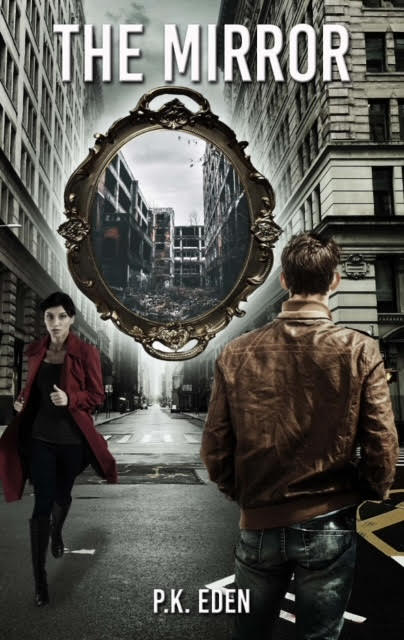
P.K. Eden is the alter ego of multi-published and award winning authors Patt Milhailff and Kathye Quick whose debut novel FIREBRAND was lauded as comparable to the Harry Potter series, garnered 5-Star reviews, and won numerous  Reviewer’s Choice Awards.

Website & Social Media:

Website www.Kathrynquick.com  

Twitter ➜ https://x.com/KQuickAuthor

Facebook ➜ https://www.facebook.com/KathrynQuickBooks/

Instagram ➜ https://www.instagram.com/kathrynquickauthor/

Goodreads https://www.goodreads.com/book/show/217228581-the-mirror

📙 Thank you for your time in answering our questions about getting published.  Let’s begin by having you explain to us why you decided to become an author and pen this book?


P K Eden (Kathye Quick): Patt and I decided to write this series based on the fairy tales of the Brothers Grimm because one day we were fantasizing about all the things we could do if we had the spinning wheel that turned straw into gold, but of, course, it wasn't real. But what if it was?


📙
Is this your first book?

P K Eden (Kathye Quick): No. This is our second brook as P K Eden in collaboration with my writing partner Patt Milhailoff.  Our first collaboration, Firebrand, told of the return of the Garden of Eden and involves every kind of fantasy creature - fairies, trolls, orcs, sprites, and, of course, humans. They all have a part to play.

The Mirror is the first of a three-book series revolving around the artifacts from folk lore and fairy tales from all seven continents under the challenge to protect them from being used for personal gain or world domination.  Imagine if Elon Musk actually got his billions from the spinning wheel that turned straw into gold, or that a prick from a spindle could send your enemies into a 100-year slumber. Interesting ideas, but with good always comes the bad and the greedy.


📙 With this particular book, how did you publish – traditional, small press, Indie, etc. – and why did you choose this method?


P K Eden (Kathye Quick): Bottom line - I need an editor. My mind is so busy listening to all those voices in my head wanting to get a book of their own, that sometimes I skip words or have a sudden spelling issue. I wouldn't be surprised if there was a typo of two in this interview. Hope not.

Our publisher, The Wild Rose Press, is a fabulous pathway to getting our stories out for readers to enjoy.  TWRP is a traditional publisher with a small press feel offering print and e-books. Plus working with the fabulous editors, it feels like home.


📙 Can you tell us a little about your publishing journey? The pros and cons?

P K Eden (Kathye Quick): There are lots of detours on the way to that first book. I don't like to think of them as cons; more like opportunities to get better.

Yes, there is the dreaded rejection letter and/or e-mail (sometimes dozens of them), and if you don't have a thick skin and a drive to get to the end, your writing career could end there. The waiting is brutal. Time between submission and decision can take months.

But then just when you have almost decided to take up knitting instead of writing, that call, or email, or letter comes. You are offered a contract.  The clouds' part and the rainbow forms. You are going to finally have that book.


📙 What lessons do you feel you learned about your particular publishing journey and about the publishing industry as a whole?


P K Eden (Kathye Quick): I've learned to be patient above everything. And patience was something I never had. The line for patience was too long in heaven, so I skipped it. Should have waited.

I've learned to listen to criticism and reviewers, but to remember it is my book. Take what you agree with and learn from it, but don't take everything they say and change your book into theirs. 


📙 Would you recommend this method of publishing to other authors?


P K Eden (Kathye Quick): I would recommend other authors trying all avenues. I won't ever self-publish, but that doesn't mean aspiring authors shouldn't they present the best work they can do.  As I said - I need and editor. 


📙 What's the best advice you can give to aspiring authors?

P K Eden (Kathye Quick): The same advice my father gave me - never give up. He said that quitting was what happens just before you were going to succeed. 

The Mirror is available at Amazon.


Book Publishing Secrets with Nancy Golden #books #bookpublishing


Nancy Golden wears a lot of different hats – She is a wife and mom, author, engineer, professor, horsewoman, and small business owner. She is also the founder of a writing group – the Carrollton League of Writers. Nancy lives in a suburb of Dallas, Texas and she loves to ride bicycles and horses. She is a member of the National Space Society, and she has been a Trekkie for as long as she can remember. Nancy Golden Books provides a great reader experience with well-crafted writing that will brighten your day.

Website nancygoldenbooks.com

Twitter https://www.twitter.com/ncgolden1  

Facebook https://www.facebook.com/profile.php?id=61564426002283 

Instagram https://www.instagram.com/ncgolden1 

Goodreads https://www.goodreads.com/book/show/216235312-ring-of-rosin 

📙 Thank you for your time in answering our questions about getting published.  Let’s begin by having you explain to us why you decided to become an author and pen this book?


Ring of Rosin was the natural next book in my Dynamis series. In Book 1 we learn about the main character and his journey to become king of Elayas. We find out about the three symbols attached to the true ruler of Elayas: the Sword of Fate, the Ring of Rosin, and the Key of Power. The three books in the Dynamis trilogy each draw special significance from one of these symbols. I had a lot of fun with the characters and plot twists, and I think you will, too.

I love having a positive impact on my readers. When my writing touches someone’s heart, or they find themselves immersed in the story as an entertaining haven away from the trials of this world, or the message in its pages provides someone with hope – it doesn’t matter how hard it gets (and being an author gets very hard)– it makes being an author supremely worthwhile.

📙 Is this your first book?

Nancy: Ring of Rosin is actually my sixth book. It is the second in my fantasy trilogy, the Dynamis novels. Sword of Fate is the first book in the trilogy, and I will be releasing Key of Power at the end of March. I have a very fun near-future science fiction book, Alien Neighbors, about a First Contact. I also write nonfiction and have a Christmas Devotional, a Lenten Devotional, and a book about how to share the Gospel. While I write across genres, my books have one thing in common – my tag line is “Light in the Darkness.” My goal is to transport you from the troubles of the world for a while with an entertaining book to brighten your day.


📙 With this particular book, how did you publish – traditional, small press, Indie, etc. – and why did you choose this method?


Nancy: I decided to self-publish (Indie) for numerous reasons. I love having control of my content and book covers. I appreciate scheduling my own publication dates and it is much faster than if it was on a traditional publisher’s schedule. 


📙 Can you tell us a little about your publishing journey? The pros and cons?


Nancy: I must say it is a tremendous amount of work – I have hard-earned knowledge that allows me to do what needs to be done. It is also very expensive. I am very committed to representing myself and my books with integrity and to doing the best job that I am able. This means I hire beta readers to read early versions and provide feedback. This means that I hire a professional editor and even after my final draft is edited, I go through it a final time before publishing. This means I hire a professional graphic artist that (with my input) designs the cover. All of these are very expensive and time-consuming. They are worth it because the book that you, dear reader, will have in your hands, is the best possible version that I can produce and represents my heart and part of my soul. I find tremendous satisfaction in that.


📙 What lessons do you feel you learned about your particular publishing journey and about the publishing industry as a whole?


Nancy: I learned a lot!! When I started pursuing my dream to be an author, I had no idea what the administrative and marketing side would entail. I feel very empowered as an author, but that did not come easily. Years of learning both my craft and the business of my craft has brought me to where I am today. But it is a journey that never ends – we can always improve in our understanding of the publishing process and in our writing.


I have learned and grown from each book – applying what I have learned to the next one. The publishing industry is changing as technology changes, but one thing remains the same regardless of which avenue you choose to pursue: you can’t just write your book and publish it. If you want to get it into the hands of your readers, you must market it. With the millions of books on Amazon, it is easy to get drowned out. To rise above the noise, you must market yourself and your books. Connecting with your readers is very powerful but won’t happen unless you initiate it.


📙 Would you recommend this method of publishing to other authors?


Nancy: I would recommend this method for those who have a continuous learning mindset and are willing to put in the hard work needed to understand the process. I thought writing a book would be hard – but the really hard part is doing all of the administrative tasks that revolve around publishing a book and the marketing during and after the process.


📙 What's the best advice you can give to aspiring authors?

Nancy: My advice to aspiring authors is simple. Keep writing. You will need to spend an inordinate amount of time on administrative stuff, marketing, and researching. It is easy to let those things take over. Make sure you are still making writing a priority. I am thrilled to be able to respond to these questions and to be a part of Book Publishing Secrets and that is a wonderful thing, but you can bet that I will also carve out some time to write today.